
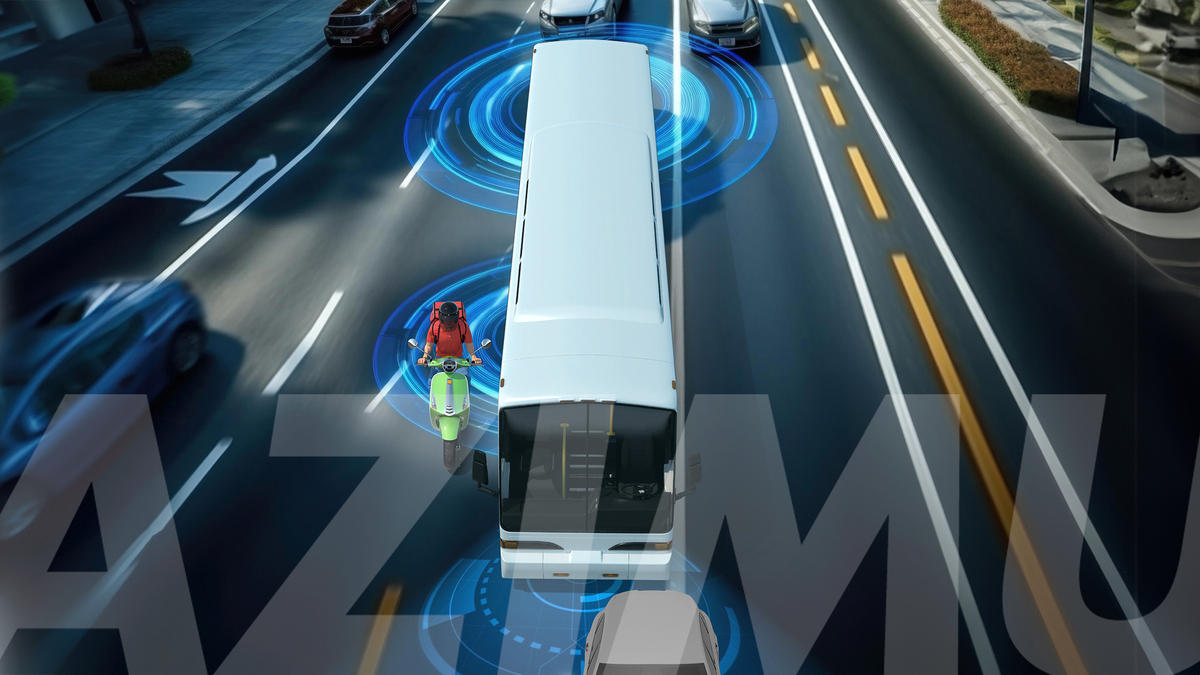
Safety in public transport is of vital importance to ensure the integrity of passengers, as well as pedestrians and cyclists sharing the roads. In recent years, active safety cameras have become a fundamental tool for improving bus safety. These cameras, strategically placed on the vehicle, monitor the start-up, reversing and presence of pedestrians and cyclists in the vicinity of the bus, emitting acoustic and visual signals to warn of the risk. In this article, we will explore how active safety cameras protect pedestrians and cyclists and improve bus driving.
Safe start-up: European Standard R159
This standard considers homologation measures related to the information system at the start of the ride to avoid harm to pedestrians and cyclists. The solution to comply with this regulation is to install a kit to warn of the presence of vulnerable road users. In this way, the driver is warned of the blind spot of pedestrians and cyclists.
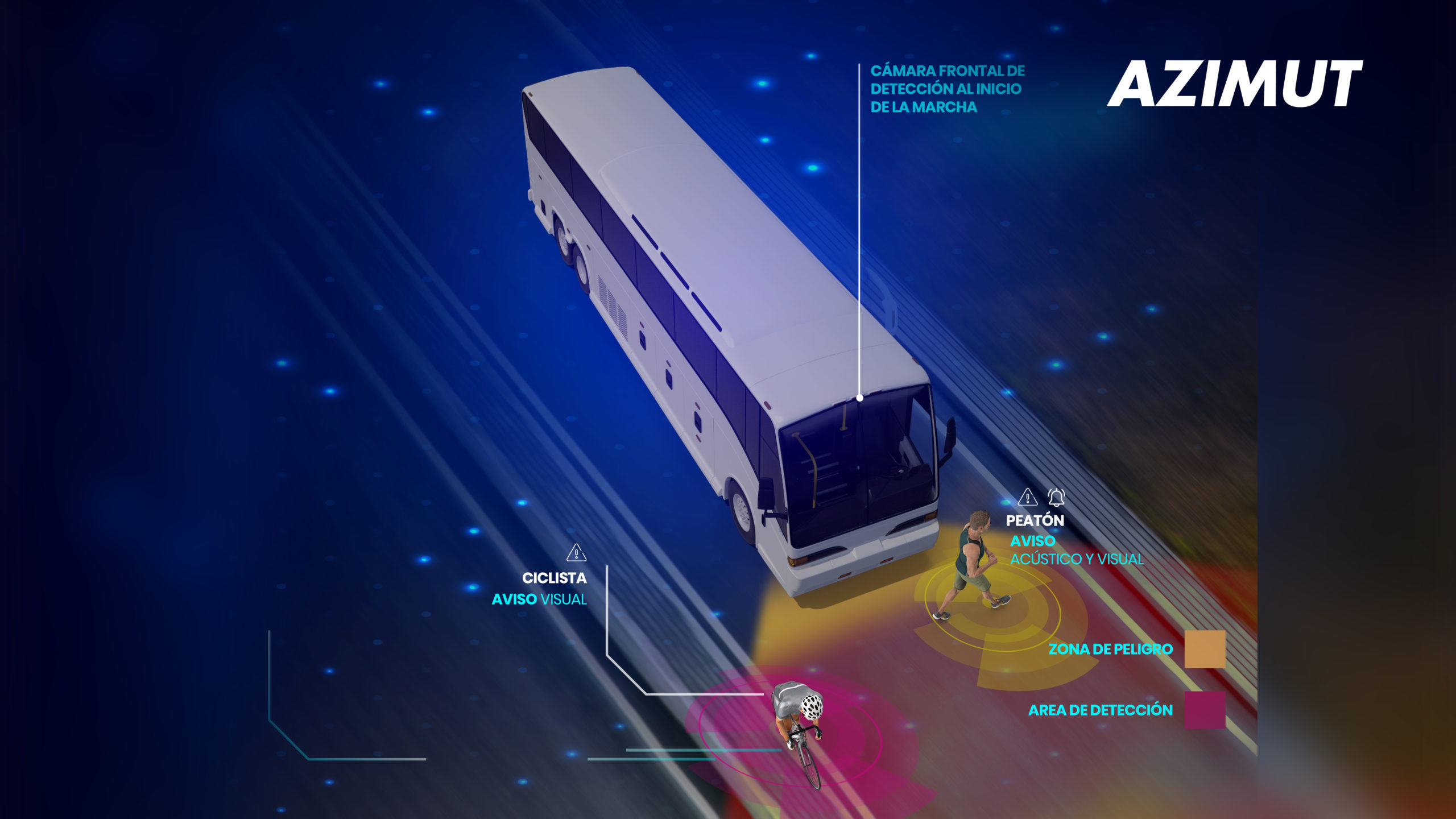
The start of the bus is a critical moment for the safety of both passengers and people in the vicinity of the bus. Active safety cameras located at the front of the vehicle detect the presence of pedestrians and cyclists in the starting area. If someone is detected in proximity to the bus, the cameras emit acoustic and visual signals to warn the driver and people nearby of the risk. This enables an immediate response and avoids possible accidents or injuries during the start-up.
Safe reversing: European Standard R158
It deals with the approval of reversing devices, as well as warnings of the presence of vulnerable persons behind the vehicle on the road. We recommend that, in this case, you install a kit consisting of a camera, monitor and ultrasonic sensors that can display blind spots and emit a visual and an acoustic signal. Thanks to these devices, the driver will know if there are vulnerable pedestrians in blind spots.
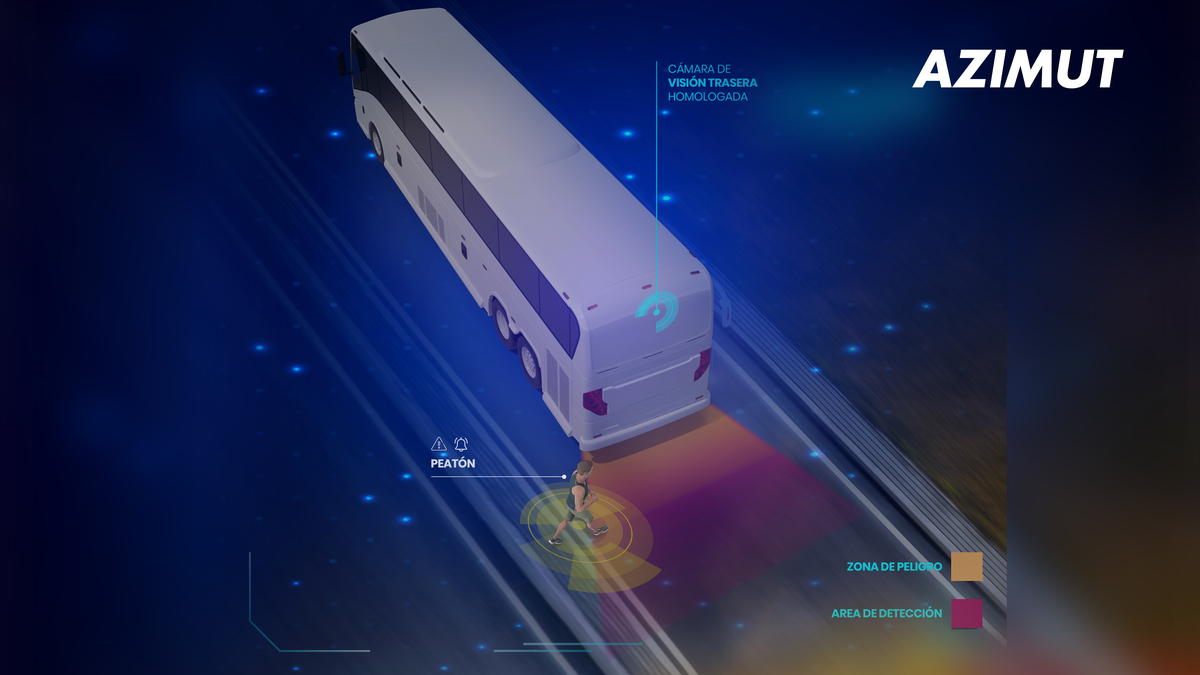
Reversing is a maneuver that requires special caution, as there is a high risk of not noticing people or vehicles in the path of the bus. Active safety cameras at the rear of the vehicle provide a clear view of the reversing area, helping the driver to identify any obstacles or people in the way. If the presence of pedestrians or cyclists is detected, the cameras emit acoustic and visual signals to warn both the driver and people nearby, avoiding collisions and ensuring safe reversing.
Pedestrian and cyclist protection: European Standard R51
It contains uniform provisions regarding the approval of motor vehicles with respect to the blind spot warning system for the detection of bicycles. To comply with it, there are devices that include a radar with visual and audible indication that facilitates the detection of such points.
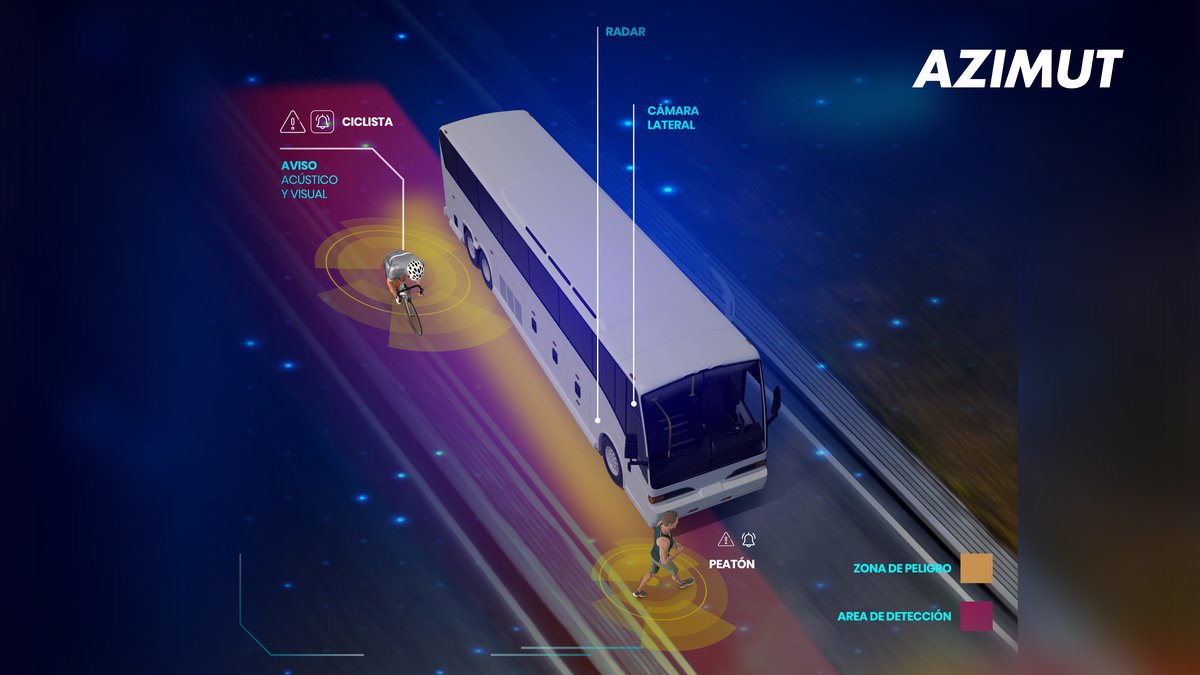
Active safety cameras also play a key role in protecting pedestrians and cyclists who share the road with buses. These cameras constantly monitor the vicinity of the vehicle and detect the presence of people and bicycles. If a pedestrian or cyclist in danger is identified, the cameras emit acoustic and visual signals to warn both the driver and the person at risk. This enables preventive action, such as braking or taking evasive action, avoiding accidents and ensuring the safety of all involved.
Which vehicles have to comply with these regulations?
At present, its application is not mandatory for those already in circulation and neither is it mandatory for the Aftermarket. However, it is mandatory for the following:
- New homologation: from July 2022.
- First registration, as of July 2024.
Reversing camera and other products can be installed
For all these reasons, many companies that operate in the field of passenger and freight transport are already getting down to work. Complying with the specifications is not only a matter of legality, but also of comfort and safety for people.
In this sense, digital transformation and new technologies have made possible the connected smart bus, a model that is increasingly present on our roads. These vehicles have real-time visibility, integration and collaboration with proprietary and third-party applications and controlled driving. In addition, with this type of advances, you have the possibility of tracking with access to a single platform.
Today, these active safety systems are applications and devices with excellent performance. If you want to minimize dangers on the road, do not hesitate to incorporate the following innovations in your fleet:
- 360-degree vision system.
- Wifi with M2M technology for passengers.
- Front view camera for detection of vulnerable users.
- Mirror cam. Digital rearview mirror.
- Advanced driving assistance system.
- Security event monitoring system.
- Telematic fleet management system.
- Automatic passenger counter.
- Radar to warn of vulnerable users.
- Real-time monitor.
- Onboard entertainment system.
- USB. Onboard power system.
- Blind spot system.
- CCTV. Security system with on-board cameras.
- Rear vision camera to locate users at risk.
What are the advantages of using these devices?
Installing active safety systems can reduce the risk of accidents by 90%. Thus, the digitization of fleets has multiple benefits:
- Increases safety and saves lives.
- Improve customer experience.
- Controls the service provided by the vehicle in real time.
- Monitors the fleet and identifies drivers.
- Integrates with other solutions.
- Provides navigation data for reporting purposes.
In addition, it contributes to reducing the following indicators:
- The number of accidents by more than 50%.
- Excessive speeding.
- Operating costs.
- Fuel costs between 3 % and 7 %.
- Maintenance costs by more than 20%.
Innovation to ensure comfort and risk prevention
These innovative devices, such as the cyclist detection camera or the pedestrian detection camera, are helping to improve general well-being and road safety. If you are a manager of a transport company, you will know how important the integrity of workers and users is.
Therefore, applying the opportunities provided by technologies is crucial to improve the service you provide and the customer experience. The fact that these regulations are mandatory or will be mandatory in the near future is just one more step towards that goal.
In short, European regulations implement guidelines aligned with the values of transport companies. These, for their part, seek to optimize their management and provide a service of the highest quality, for which they count on technological advances as allies. For more information on solutions of this type, such as the reversing camera, please contact us - we will help you to improve the safety and efficiency of your transport fleet!
Want to learn more about active safety cameras and how they contribute to bus safety? Get access now! Find out how these technologies can protect you, pedestrians and cyclists, and improve driving.